Solar Eclipse Egypt 2027: A Rare Moment in Time
A rare moment in time
We are focusing here on the major solar eclipse 2027 in Egypt, but this celestial phenomenon has always existed — total or partial, depending on where you are located.
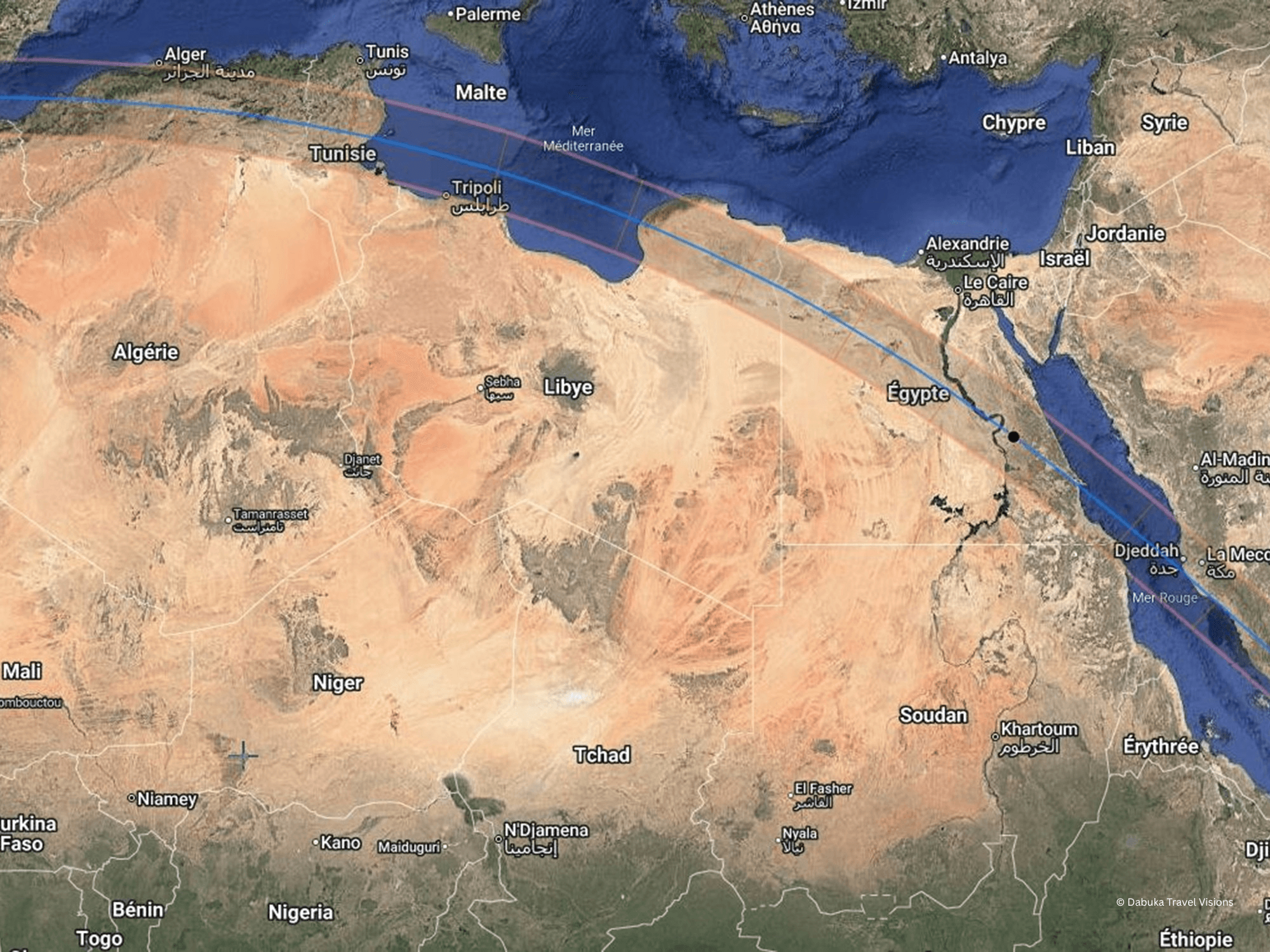
The solar eclipse Egypt 2027 on August 2, 2027 is approaching — a celestial event that has fascinated, unsettled, and inspired humanity for thousands of years.
For a few extraordinary minutes, daylight fades, temperatures drop, and the world seems to pause. In Egypt, the total phase will last more than six minutes, making it one of the longest and most remarkable eclipses of this century.
But the experience already begins long before the sky darkens.
From fear to fascination
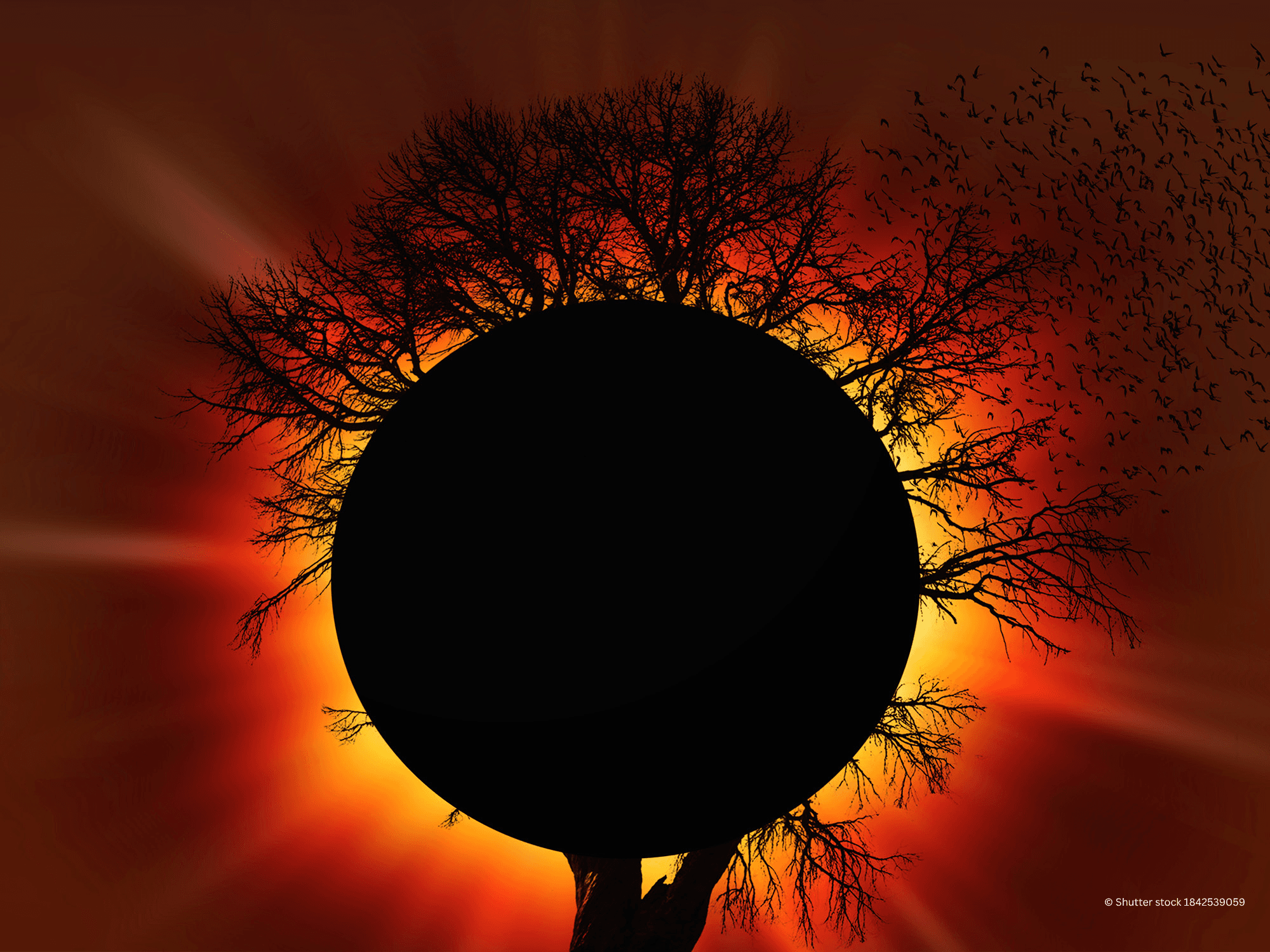
Solar eclipses have historically triggered fear and cultural interpretation, as they were seen as bad omens, signs of world-ending scenarios, or explained through superstition (for example “sun-eating dragons”).
Even though they are scientifically explainable, the sudden darkness, temperature drop, and media-driven panic can still create discomfort or irrational fear.
Historical and cultural interpretations
In many cultures, solar eclipses were seen as a disturbance of natural order and mostly interpreted as negative omens:
Ancient China: A belief that a dragon is devouring the sun. People made loud noises, beat drums, and shouted to drive the dragon away. A missed eclipse prediction in 2137 BC even led to the execution of two astronomers.
Indian mythology: The demon Rahu is seen as the cause, chasing the sun and moon after drinking the nectar of immortality.
Norse mythology: The eclipse is interpreted as a wolf swallowing the sun.
Ancient Greece: The term “eclipse” comes from the Greek meaning “to disappear” or “become invisible,” also described as a “black sun.”
Aztecs and Maya: Often associated with fear of the end of the world.
Modern/spiritual interpretation: Today, eclipses are sometimes seen as moments of intense energy, marking turning points or karmic events.

A turning point in science
Everything changed with the solar eclipse of 1919.
The British astrophysicist Arthur Eddington traveled to observe the eclipse in order to test Einstein’s theory that light is bent by gravity.
This confirmed a key prediction of Albert Einstein’s general theory of relativity: that a large mass like the sun deflects light from nearby stars.
On Earth, this means that the apparent position of stars appears slightly shifted.
The eclipse makes this measurement possible because the sunlight no longer hides the faint starlight.
Despite light clouds, Eddington was able to confirm the effect — though only with two usable photographic plates, meaning the evidence was quite limited.
In June 2019, Göttingen students Dorothee Ammer and Merten Dahlkemper repeated the experiment in Chile, using modern cameras, computational analysis, and ideal conditions in the Andes during a total solar eclipse.
Why Egypt is ideal for 2027
The Andes offer excellent conditions for sky observation, and similarly, Egypt offers exceptional conditions for eclipse observation:
almost no light pollution in desert regions
extremely dry air with rare cloud formation
stable atmospheric conditions
Because a large number of visitors is expected, less crowded locations are particularly valuable.
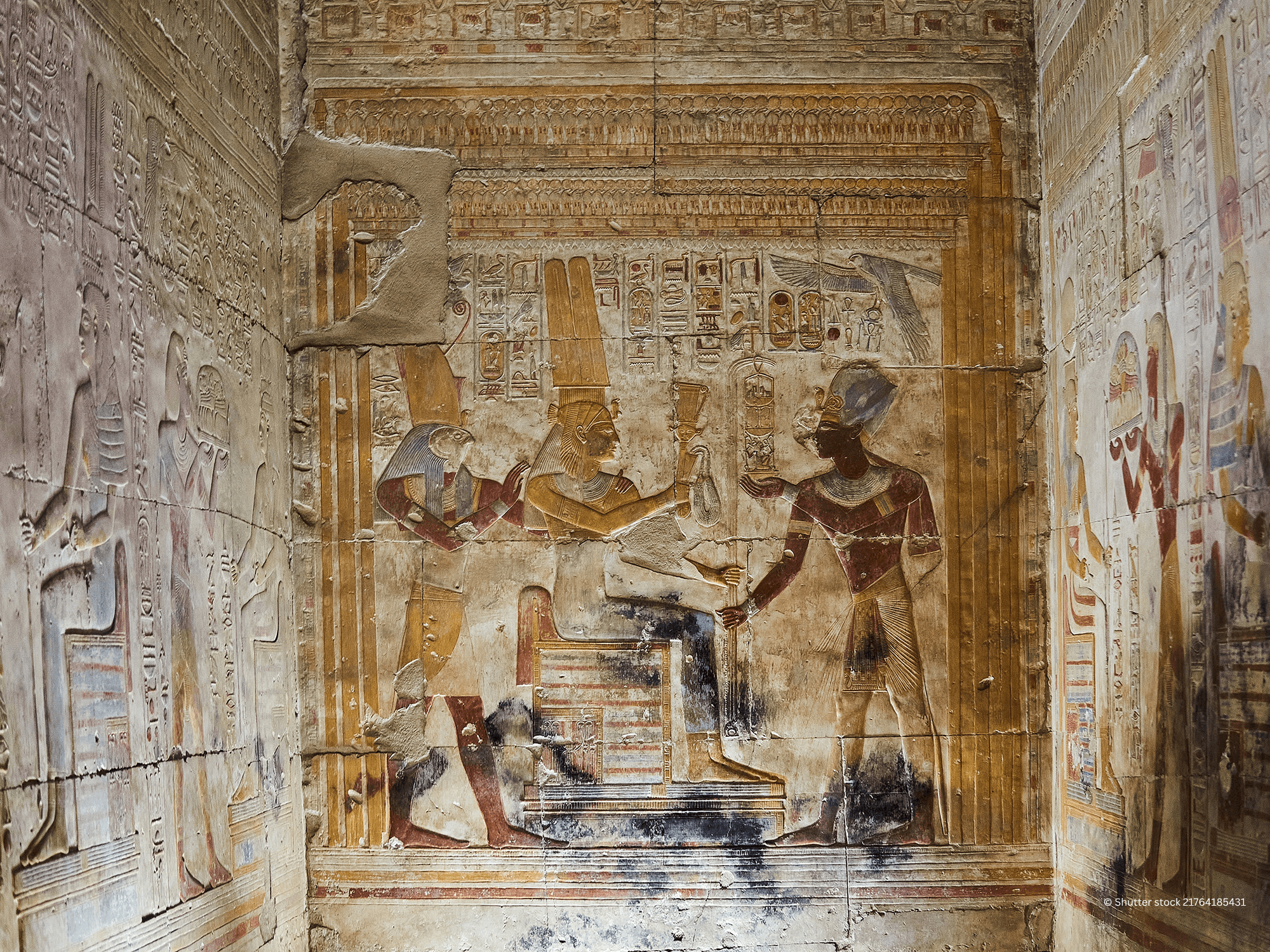
One such place is Abydos.
Here, cameras can be set up without disturbance, and the surroundings offer a rare sense of silence and space.
Overnight temperatures can drop significantly — in winter conditions even below freezing in some regions.
What the eclipse feels like
The effort is worth it: during the eclipse, images are taken in rapid succession as the sun is fully covered for only a short time.
The stars are not visible to the naked eye on photographs without processing, but scientific analysis reveals measurable shifts in light and position.
Back in Göttingen, this material is often used for academic work such as master’s theses.

The emotional dimension
Many people describe a mix of anticipation and unease long before the event:
“I’ve been thinking about this moment for years… and now that it’s so close, I’m almost nervous it won’t live up to it.”
For others:
“It feels bigger than that… like something I’m supposed to experience at least once in my life.”
And there is often one remaining question:
“We’re traveling across the world for a few minutes of darkness… will it be worth it?”
Perhaps it is exactly this uncertainty that makes a solar eclipse so powerful — the feeling of moving toward something you cannot fully explain, but somehow deeply want to witness.
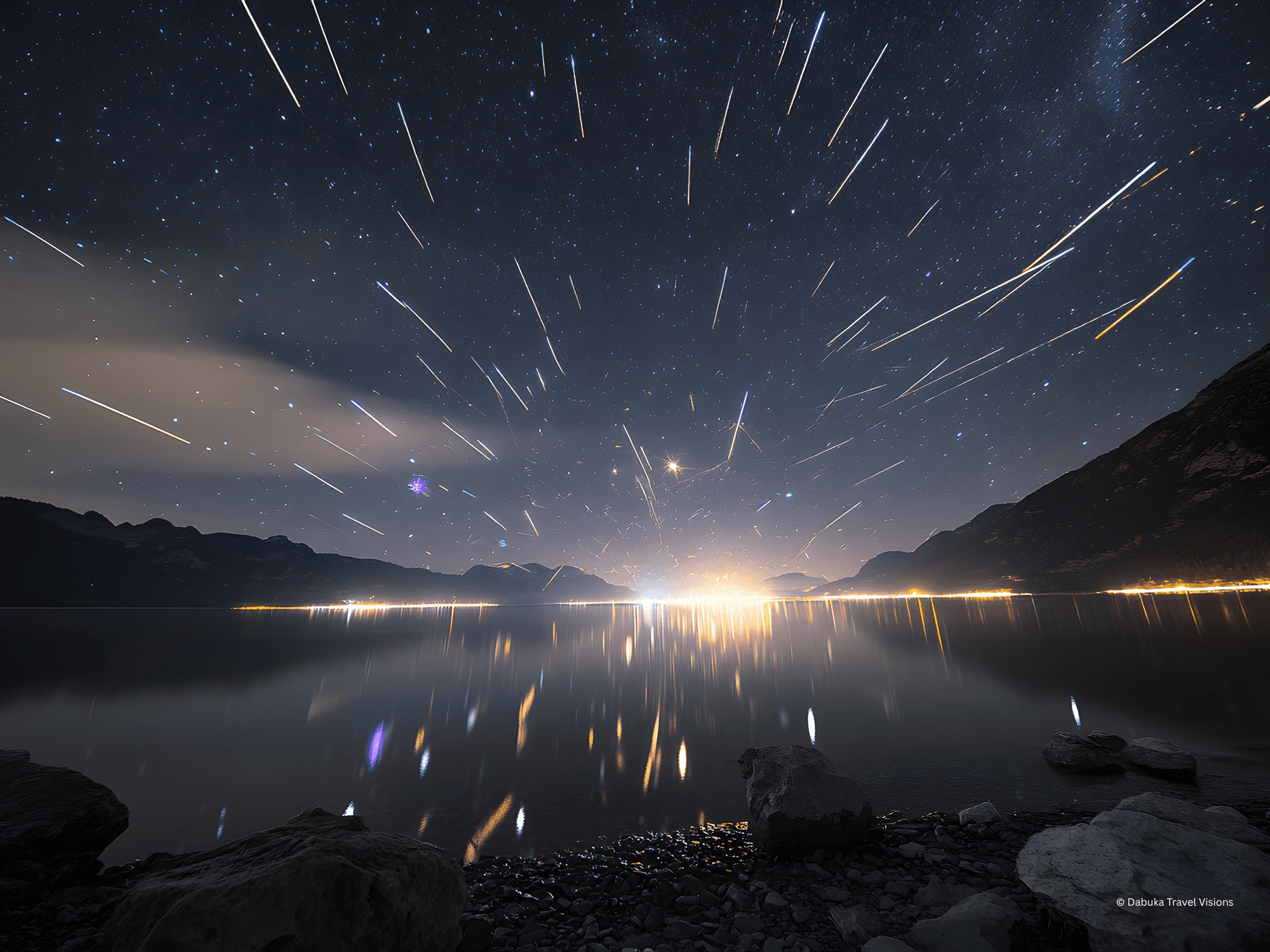
More than an astronomical event
Solar eclipses have historically been interpreted as violent signs or disruptions of cosmic order, and were often seen as battles between celestial forces.
Today, they are understood scientifically — yet they still carry a strong emotional and cultural resonance.
The solar eclipse Egypt 2027 is therefore:
a scientific phenomenon
a cultural and historical mirror
and a deeply human experience
Long before the sky begins to darken, the experience already starts in people’s minds.