Slow Water: Why a Dahabeya Is the Most Beautiful Way to Travel the Nile
Waking up on the Nile
Most people who travel the Nile do it on one of the large cruise ships that run between Aswan and Luxor. It is a practical way to see the temples of Upper Egypt, and for many travellers it is the right choice.
But there is another way to make the same journey: on a dahabeya, a traditional sailing boat with only a handful of cabins.
The route is the same and so are the main sights. What changes is the rhythm of the days and the atmosphere on board. You wake up with the river right outside your cabin window, have breakfast on an open deck, and spend the hours between visits watching fields, villages and desert cliffs pass by at walking pace.
In this article we explain what a dahabeya is, how a journey on one works in practice, and why we think it is one of the best ways to travel the Nile – including for the total solar eclipse in August 2027.
What exactly is a Dahabeya?
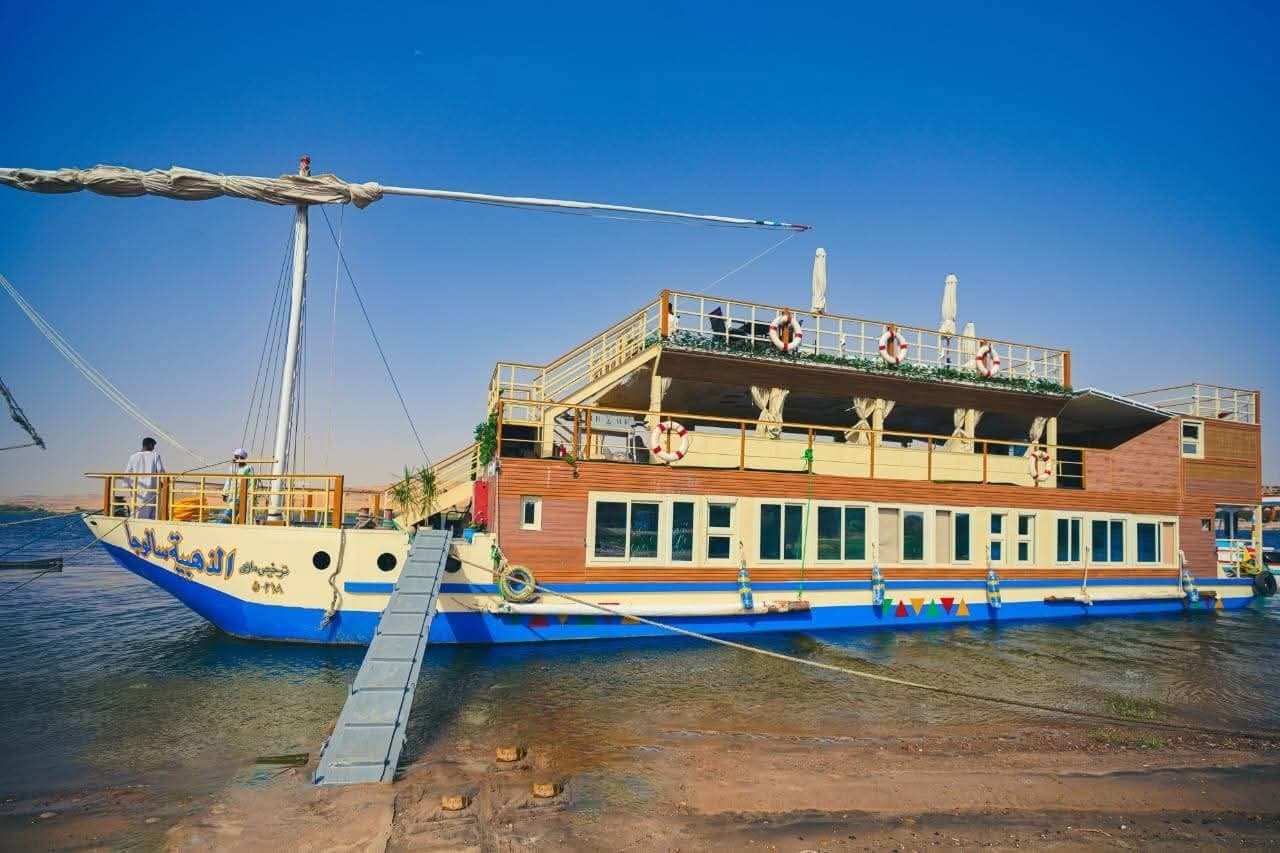
A dahabeya is a flat-bottomed Nile sailing boat with two large sails and a broad upper deck.
The name comes from the Arabic word for gold, dahab, a reference to the decorated boats used by Egyptian rulers. In the 19th century, dahabeyas were the standard way for European travellers, writers and early Egyptologists to explore Upper Egypt, often for weeks or months at a time.
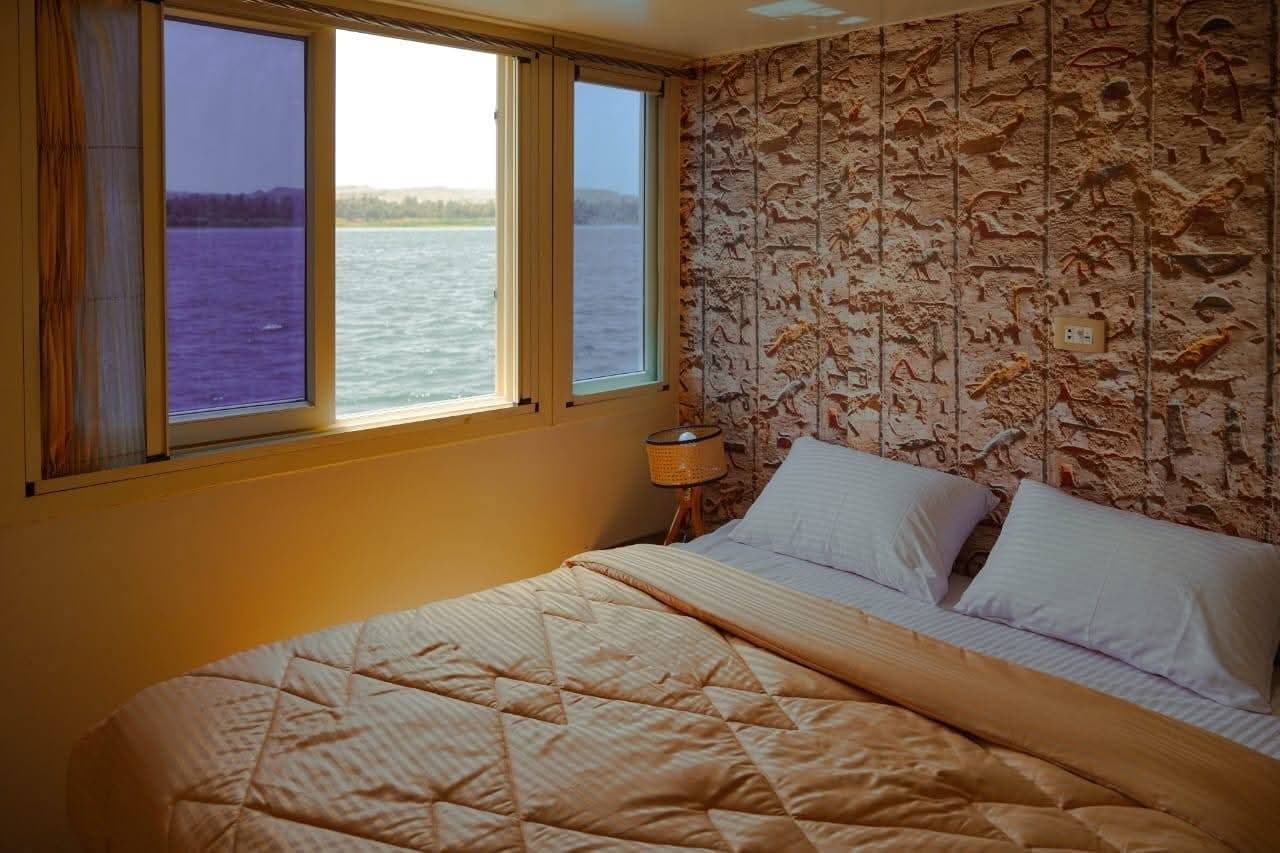
Today, many dahabeyas sail the Nile again, built in the traditional style but with modern comforts: air-conditioned cabins with private bathrooms, a full kitchen and a large sun deck with shade.
We charter several dahabeyas for our journeys on the Nile. The one we have chosen for the eclipse journey in 2027 is a relatively new boat with seven cabins, so there are never more than fourteen guests on board, looked after by a large and experienced crew.
Same temples, a different journey
We are often asked how a dahabeya differs from a classic Nile cruise.
When it comes to sightseeing, the difference is smaller than people expect. Both sail between Aswan and Luxor, both visit the same well-known temples, and at the major sites you will share the halls and courtyards with other visitors.
The real difference lies in everything in between. A large cruise ship carries a few hundred passengers, with corridors, a reception desk, buffet restaurants and evening entertainment. A dahabeya has only a handful of cabins; on our eclipse boat, there are fourteen guests at most.
There is no lobby, no loudspeaker announcements and no competition for a sun lounger. At night, the large ships usually moor side by side at busy docks, sometimes several boats deep, while a dahabeya can often tie up at a quieter spot along the riverbank. You leave the crowds at the temple gate, return to the boat, and the deck belongs to your group again.
Under sail - when the wind allows
A dahabeya is built to sail, and whenever the wind is right, the crew raises the sails and switches off the engine.
This does not happen every day: on the Nile the wind is not always reliable, and to keep to the programme the engine sometimes has to help. But on the days when the boat is under sail, you notice the difference immediately.
Without engine noise, you hear the water against the hull, the ropes and the birds along the banks. For many of our guests, these quiet hours on deck become one of the main reasons they would choose a dahabeya again.
The small number of passengers also changes the relationship with the crew. After a day or two, the team knows who prefers tea to coffee and who likes to sit in the shade. And because our dahabeya journeys are private charters, everyone on board travels as part of the same group.
A day on the river
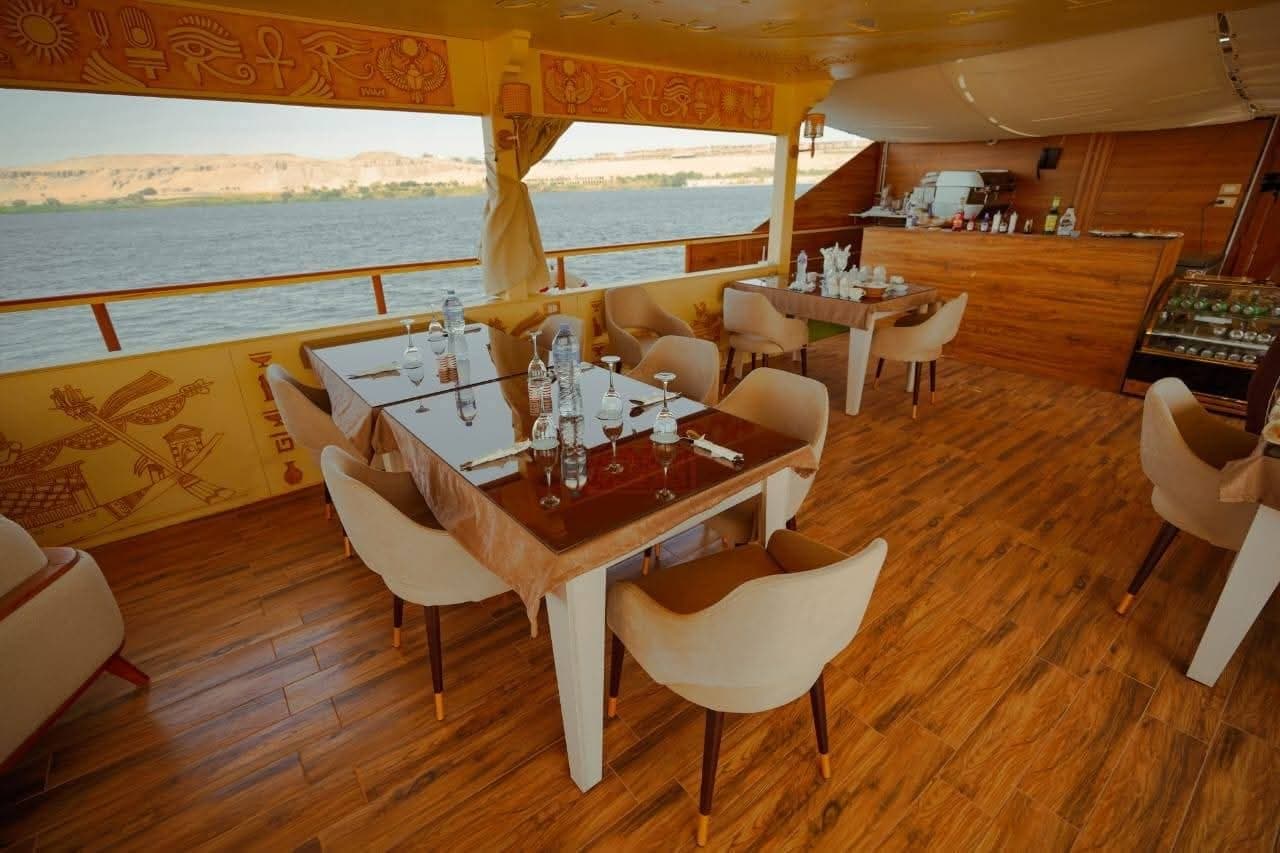
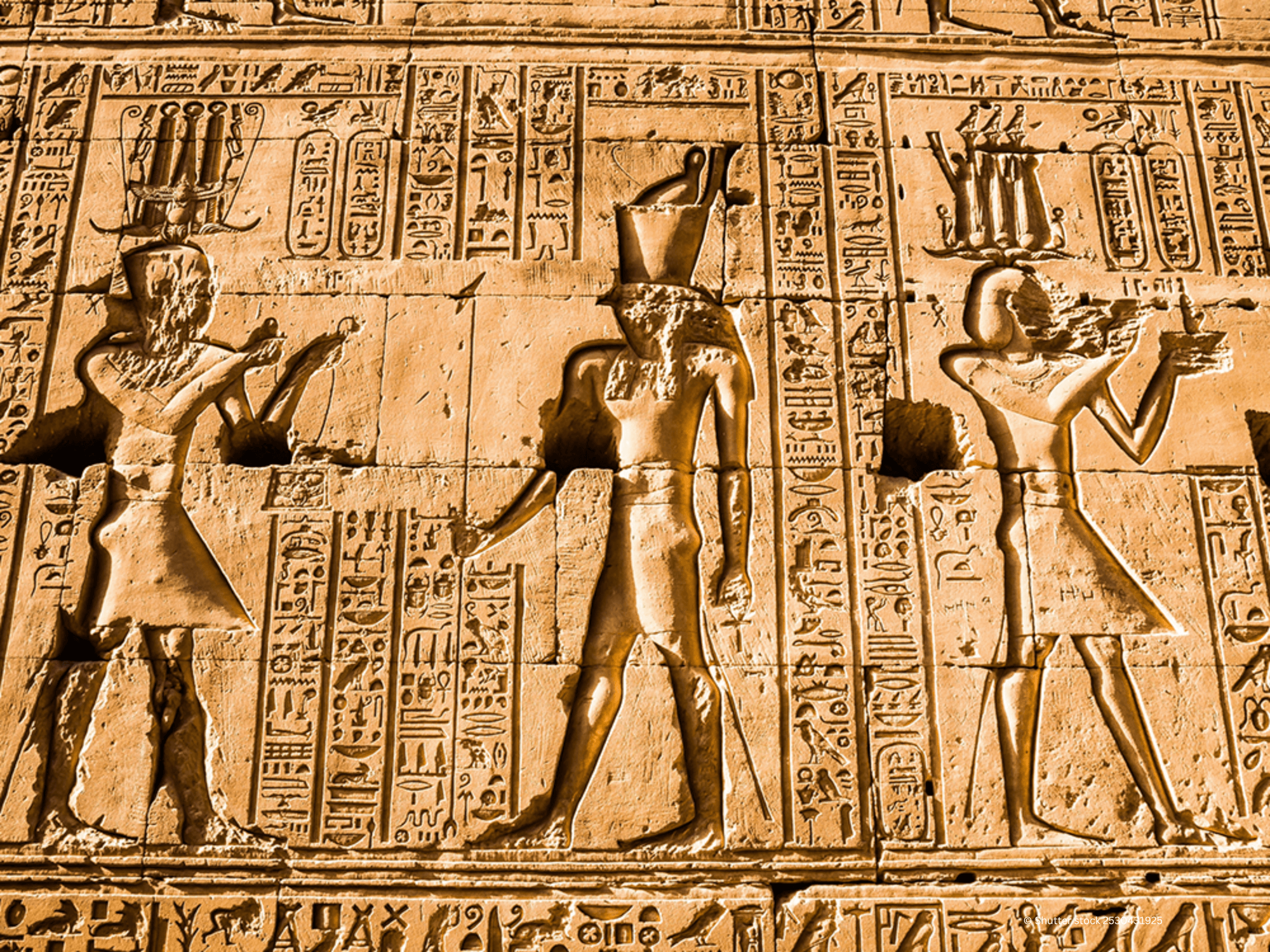
A typical day on board starts early, when the light is soft and the temperature still pleasant. Breakfast is served on deck: bread, eggs, cheese, fruit and ful medames, the slow-cooked fava beans that are a staple of Egyptian breakfasts.
The itinerary is fixed in advance, and most days include a visit ashore with your English-speaking guide, who accompanies the group for the entire journey and can explain the sites in context, from one day to the next.
Afterwards, the boat continues north. Between the visits there is free time on board: some guests read or rest in their cabins, others stay on deck and watch the landscape – irrigated fields and palm groves on one side, desert cliffs reaching down to the water on the other.
Lunch and dinner are cooked fresh on board and are mostly Egyptian dishes such as stuffed vine leaves, molokhia, grilled fish, rice and vegetable stews. Dietary requirements and individual preferences are easy to accommodate with a small group.
Evenings on board
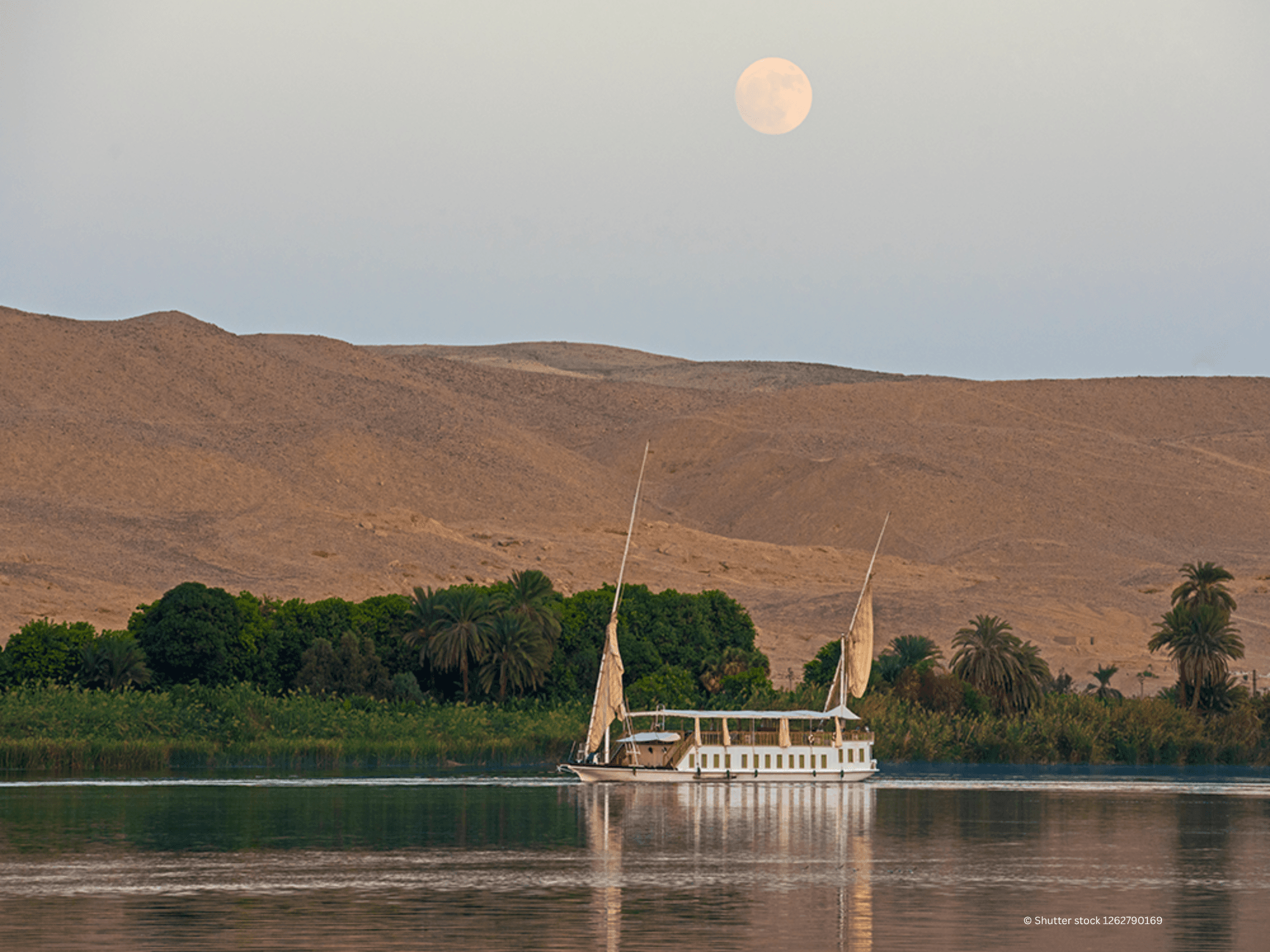
In the late afternoon, the boat stops for the night.
Sunset on the Nile is short but impressive, and most guests make a point of being on deck for it. After dinner, away from the lights of the larger towns, the night sky is noticeably darker than most of us are used to, and on clear nights you can see far more stars than at home.
Evenings on board are generally quiet, and most people spend the time talking on deck or turn in early before the next morning's visit. On the last evening, the crew organises a small cultural evening on board as a farewell before the group reaches Luxor It is a relaxed end to the journey and a chance to thank the crew who have looked after the group for the past days.
Temples from Aswan to Gebel Silsila
The stretch of the Nile between Aswan and Luxor has some of the best preserved temples in Egypt, and travelling it by boat means visiting them in geographical order.
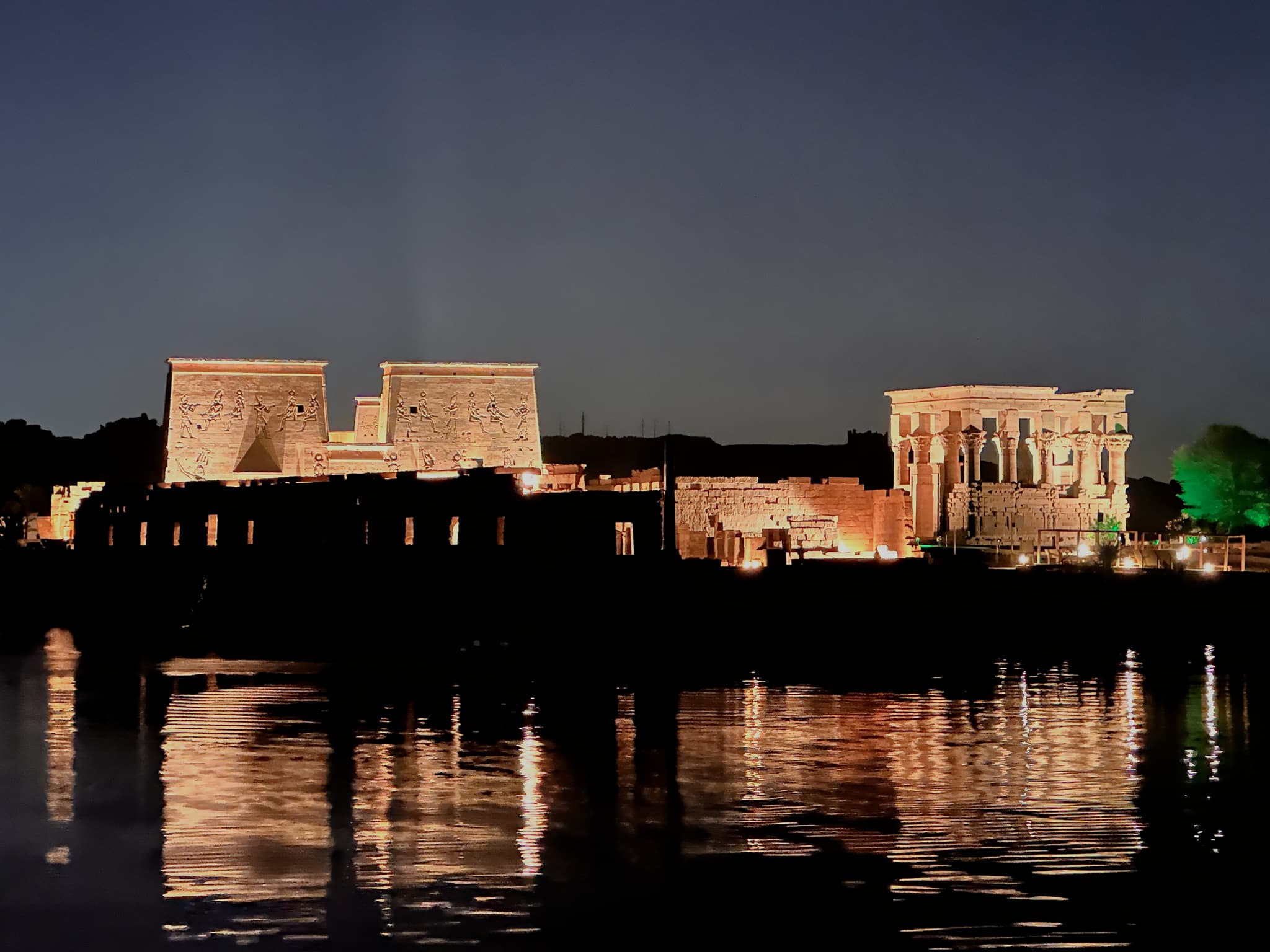
The journey begins in Aswan, with its granite islands, feluccas and Nubian villages. From here, a short boat ride takes you to Philae, the temple of the goddess Isis, which was dismantled and rebuilt on a neighbouring island when the Aswan dams were constructed.
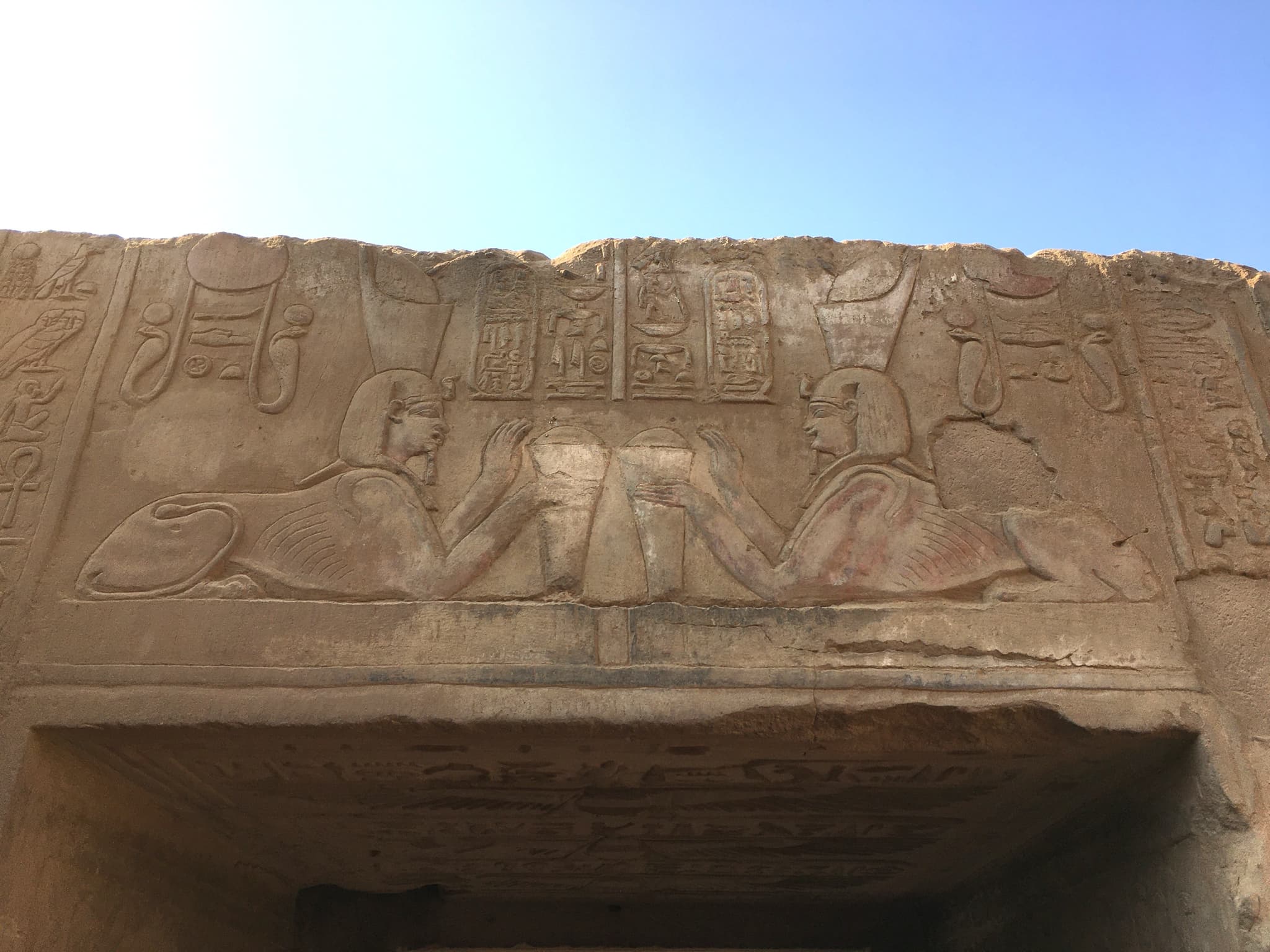
There is also the option of a day trip to Abu Simbel and the rock temples of Ramses II. Further north lies Kom Ombo, a double temple dedicated to two gods, the crocodile god Sobek and the falcon-headed Haroeris; a small museum next to the temple displays mummified crocodiles.
Then comes Gebel Silsila, the ancient sandstone quarry that supplied stone for many of the great temples, with small chapels and shrines carved directly into the cliffs and the marks of ancient chisels still visible.
Edfu, Esna, Luxor
The Temple of Horus at Edfu is the most completely preserved temple in Egypt. Its walls, roof, sanctuary and massive entrance pylon are all intact, which gives a good idea of how an Egyptian temple was laid out and how light and space were used to lead towards the sanctuary.
At Esna, the Temple of Khnum has recently been cleaned and restored. The work has uncovered ceiling paintings in strong blues, reds and golds that had been hidden under layers of soot for centuries.
The journey ends in Luxor, ancient Thebes, with the temples of Karnak and Luxor on the East Bank and the Valley of the Kings on the West Bank. Having travelled along the river for several days, with the same guide and in chronological sequence, many guests find they understand these sites far better than if they had arrived directly by plane.
Why a dahabeya works well for the 2027 eclipse
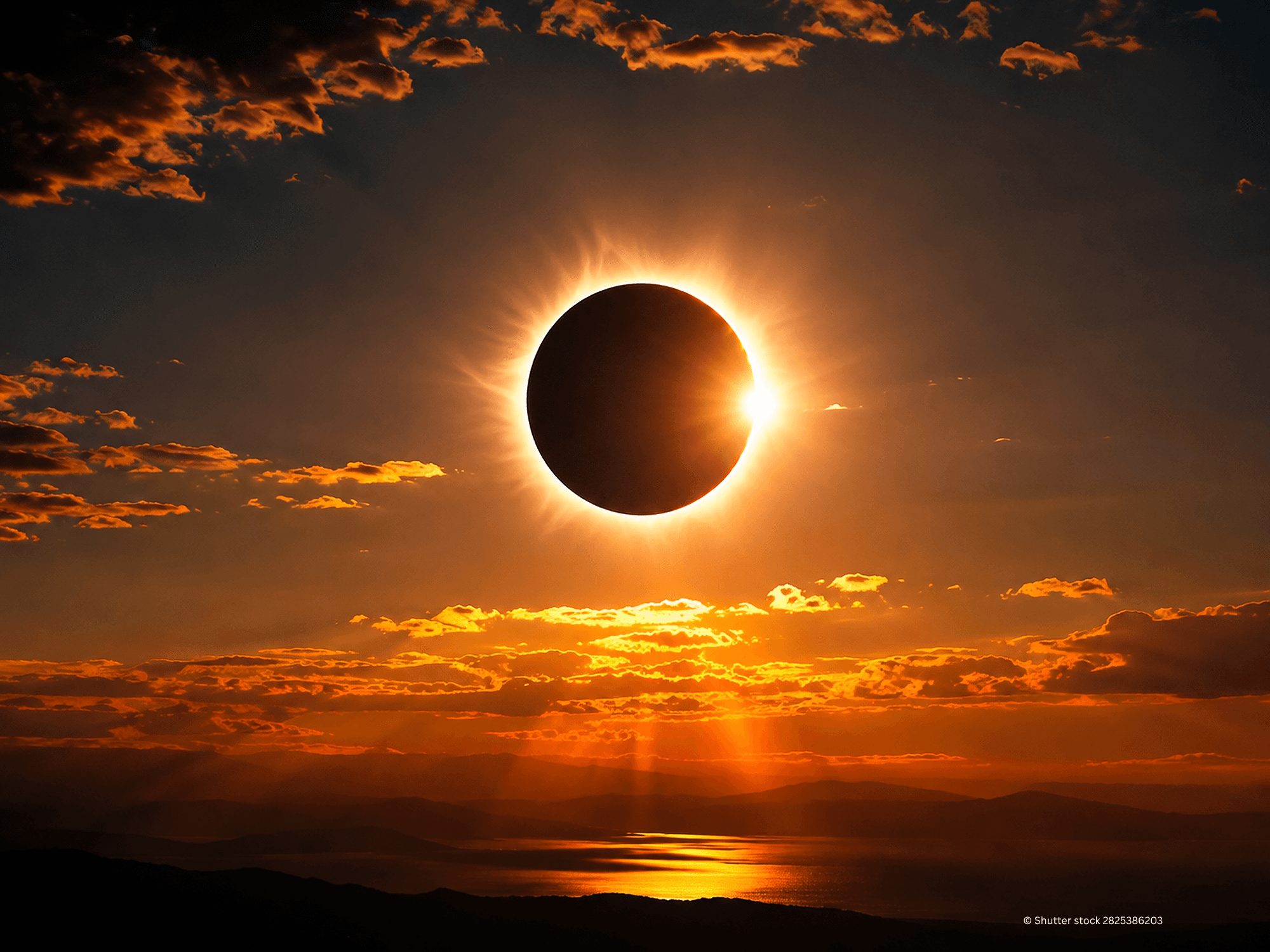
On 2 August 2027, a total solar eclipse will cross Upper Egypt. Near Luxor, totality will last almost six minutes, and the event is expected to attract large numbers of visitors.
This is where the advantages of a dahabeya become very practical. On eclipse day, you do not need to travel to a viewing site, find a place in a crowd or deal with traffic on the roads around Luxor: you watch from the boat. The sun deck is large enough for all fourteen guests to have their own space, with room for cameras and tripods, and it is reserved exclusively for the group.
The days before the eclipse are spent travelling at an easy pace, which leaves time to go through the timings and prepare equipment without stress. And once the eclipse is over, the boat simply continues south towards Aswan, while many other visitors are still on their way back to their hotels.
Join us on the Nile
If you would like to experience the Nile this way, our Private Dahabeya journey from Aswan to Luxor combines all of the above.
The boat has seven cabins and takes a maximum of fourteen guests. The route includes Philae, Kom Ombo, Gebel Silsila, Edfu, Esna and Luxor, with full board, entrance fees and an English-speaking guide included. The journey runs from 26 July to 4 August 2027 and is timed for the total solar eclipse on 2 August.
Find out more and check availability here.